
What is emulsion paint?
5 min reading time
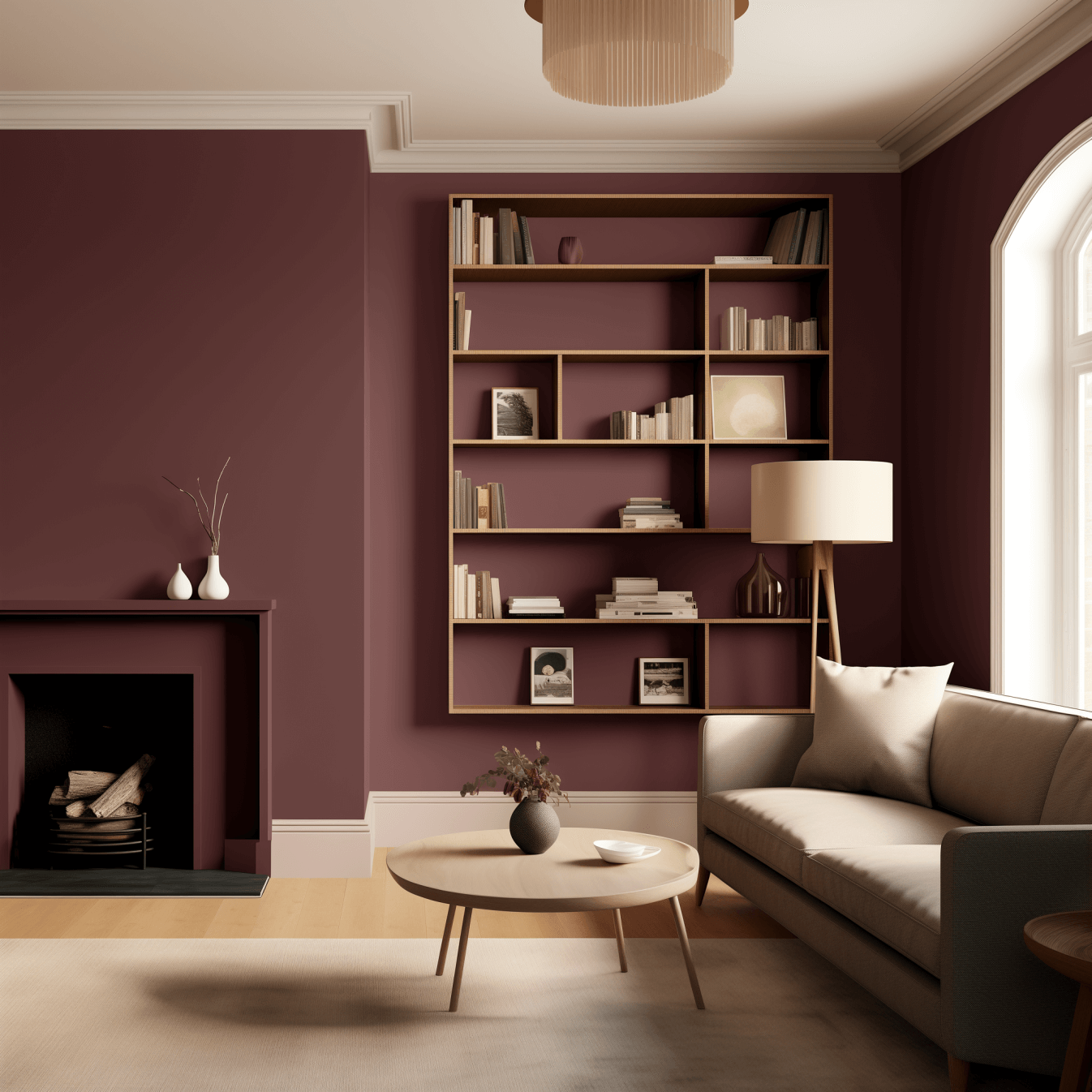
Emulsion paints are often used when moving into a new home or during renovation work. These are certainly the most commonly used paints for interiors. But what exactly is emulsion paint? What is it made of and what advantages does it offer? We have looked into the most frequently asked questions and show you below what you need to know about emulsion paints.
What is Emulsion Paint? Its Composition
At its core, emulsion describes a mixture of at least two substances that do not readily dissolve or chemically combine with each other. Emulsion paints are emulsions made from organic binders, solvents, pigments, and additives such as preservatives. Water or organic solvents are used as solvents. Depending on the manufacturer, acrylic or synthetic resins are often used as binders. Besides solvent-based or water-based paints, there are also natural emulsion paints. These are based on natural oils and contain natural vegetable oils, such as linseed oil, instead of synthetic and mineral oil-based oils.
Strictly speaking, both wall paints and paints fall under the umbrella of emulsion paints. However, in everyday language, the term 'emulsion paint' is most commonly used for wall paints.
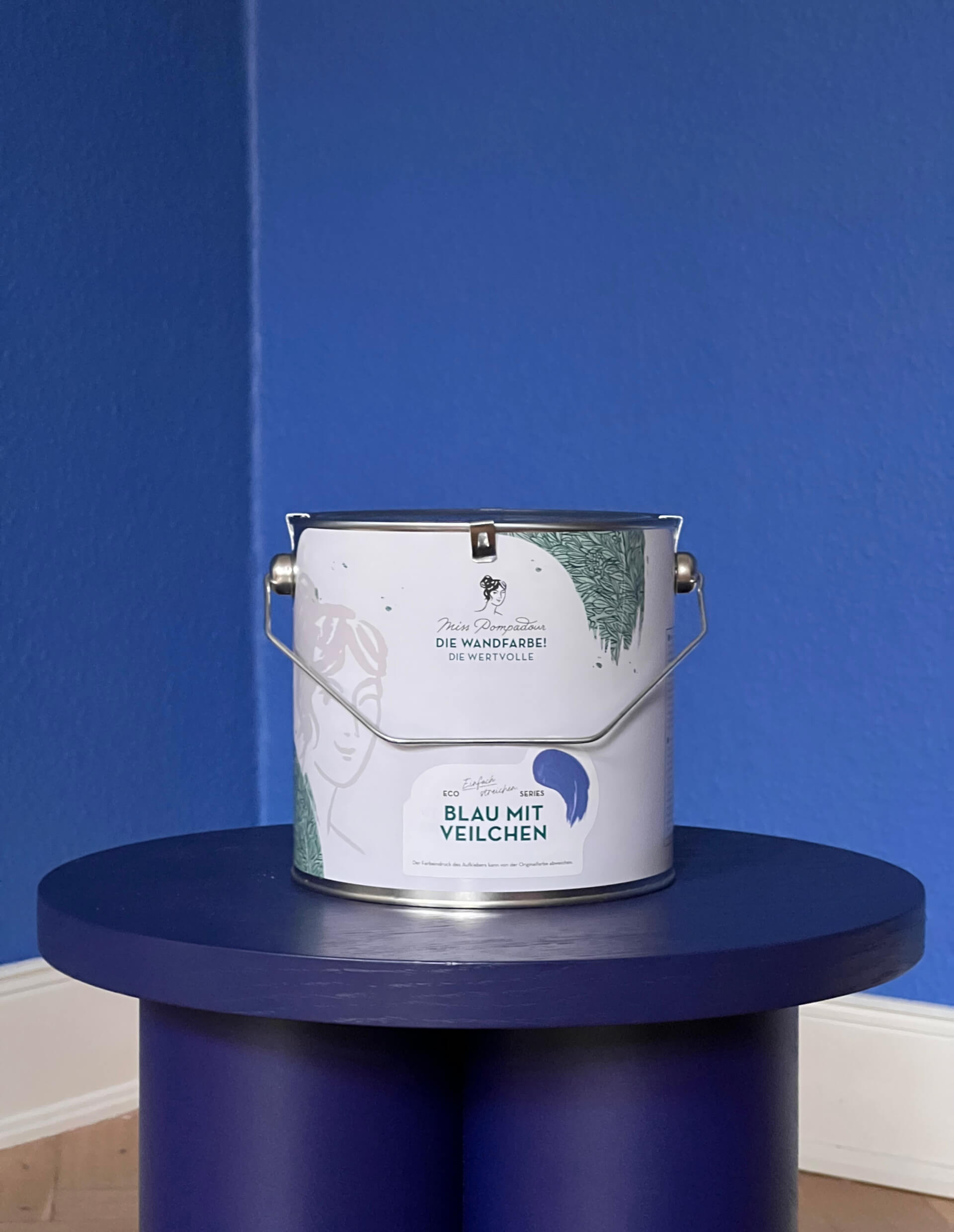
MissPompadour offers high-quality, high-coverage emulsion paints. For example, the wall paint The Valuable Wall Paint! is exclusively water-based. It is emissions-minimised and completely free from preservatives (in accordance with VdL Guideline 11).
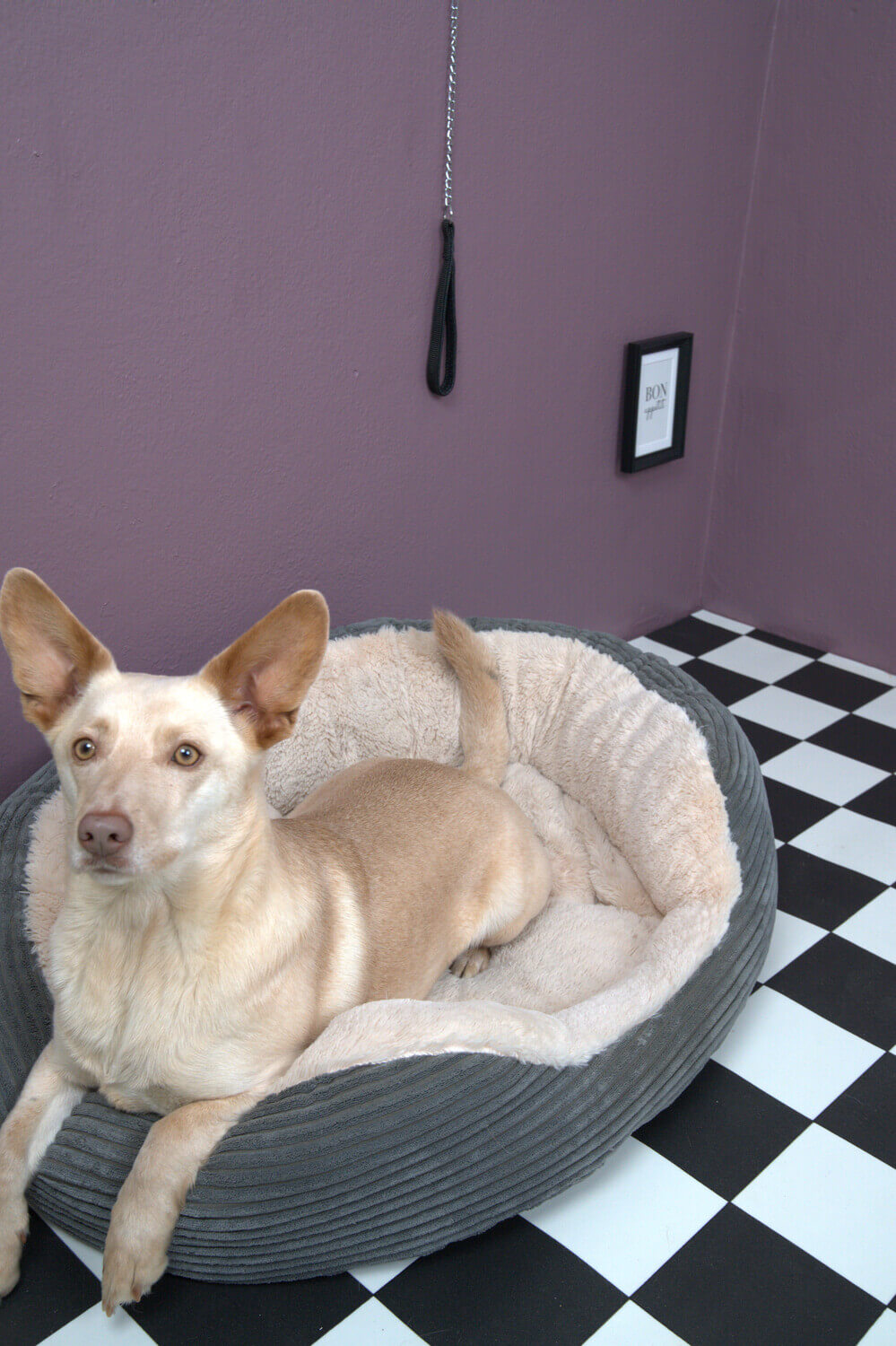
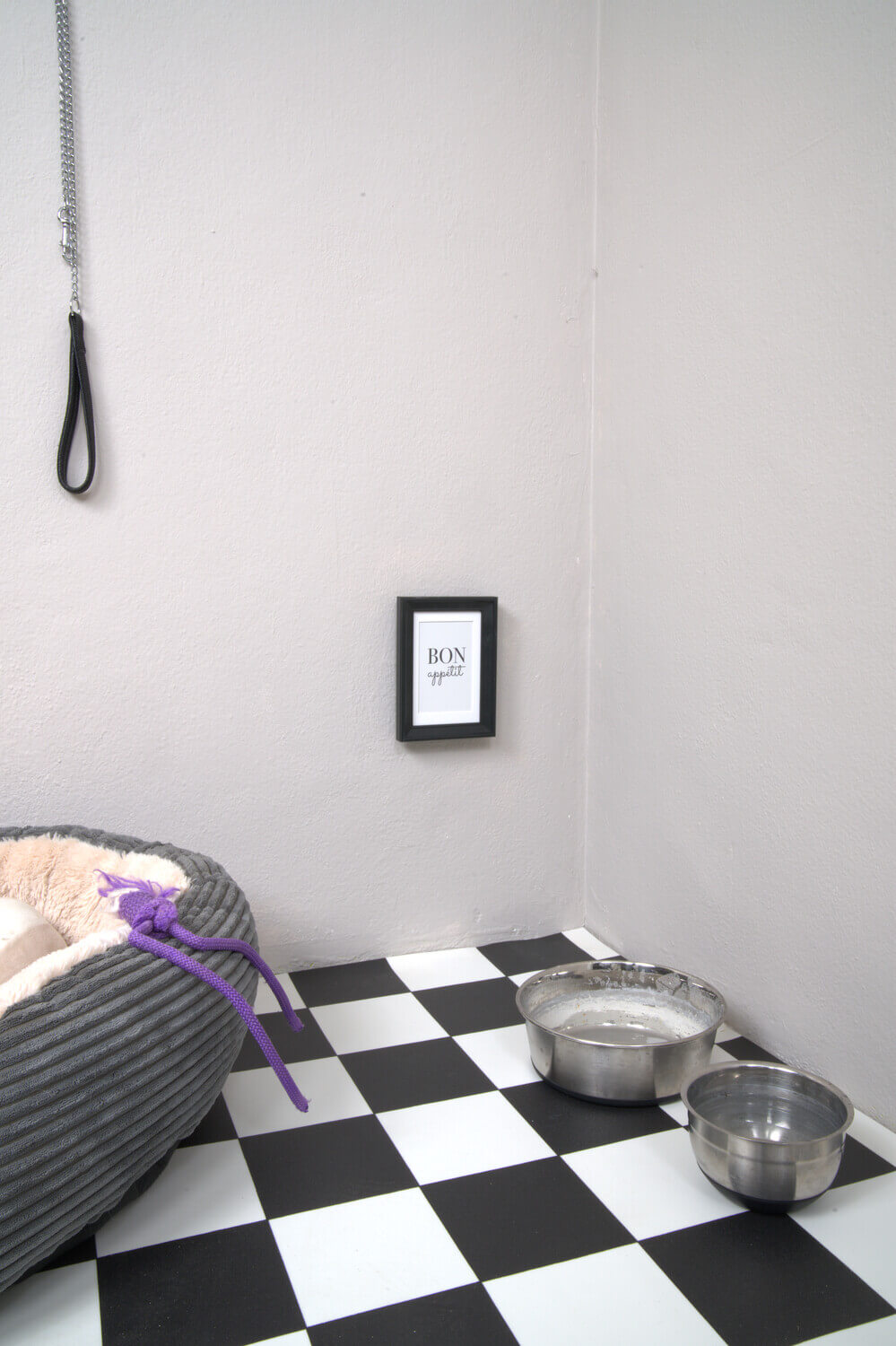
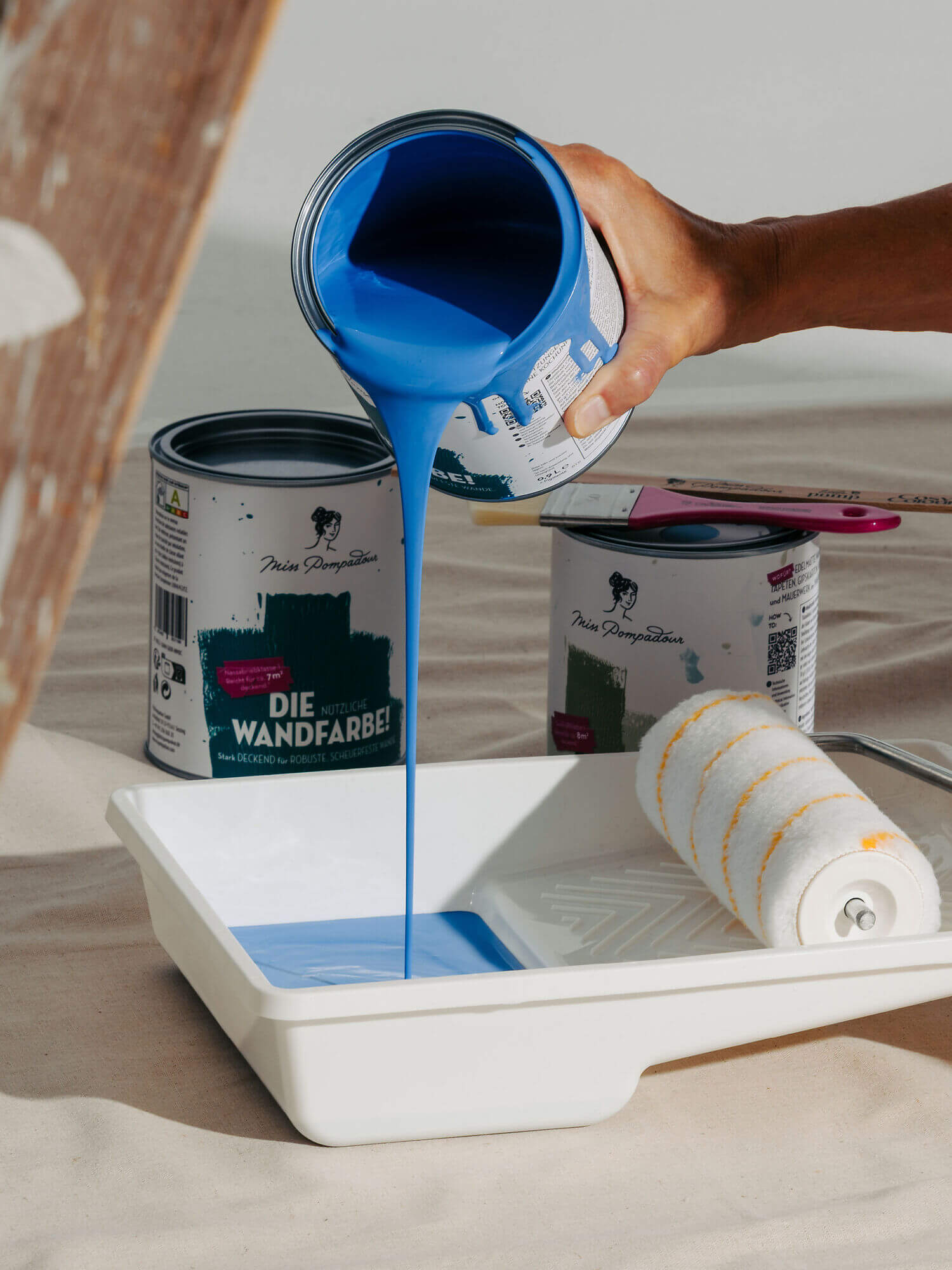
Emulsion paints for the wall from MissPompadour
Benefits of Emulsion Paints
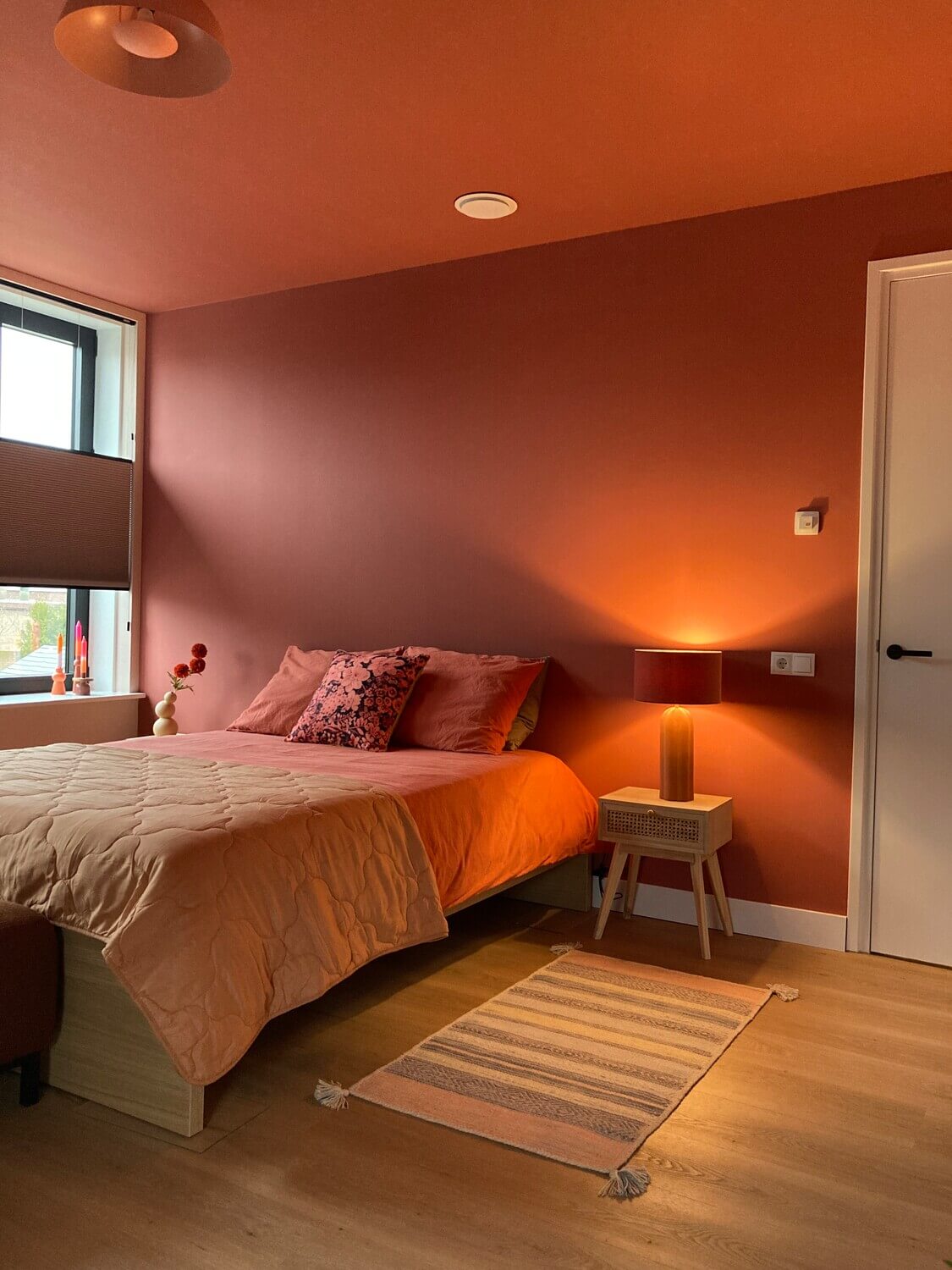
Emulsion paints come in a vast array of shades and finishes, from crisp white to vibrant colours, and from silk matt to a true matt. Their many advantages make them a firm favourite for painting interiors, with white emulsion undoubtedly being the most popular choice.
One of the biggest advantages of emulsion paints is certainly their fast drying time after application. Our high-quality MissPompadour paints are a joy to work with. They're low-splash and drip-free, making them ideal for painting ceilings too. Emulsion paints are also easy to paint over. What's more, water-based paints have very little odour. Excellent coverage is crucial, ensuring a stunning finish with the fewest possible coats. The coverage class indicates this (Class 1 means very high coverage, as seen with The Valuable Wall Paint!). Washable paints can be wiped clean; for this, pay attention to their wet scrub resistance (all MissPompadour wall paints have Class 1: very high scrub resistance). MissPompadour paints are also known for their high breathability and vapour permeability.
Emulsion Paint: Finding the Perfect Interior Paint
Not all emulsion paints are created equal, so it's important to choose the right one. At MissPompadour, you can find various interior emulsion paints.
- MissPompadour The Valuable Wall Paint! is an extra-matt, high-quality emulsion paint free from preservatives. What's more, this emulsion paint is breathable, allowing your walls to breathe.
- Our MissPompadour The Functional Wall Paint! is a washable emulsion paint, especially suitable for high-traffic walls, such as in hallways or kitchens. Despite its high scrub resistance, this wall paint offers excellent breathability. Unlike many latex paints, our wipeable emulsion paint can be painted over at any time.
Tip: Spray emulsion paint instead of brushing
Emulsion paint, in particular, can be sprayed onto the wall using a paint sprayer. This means you won't need to use a brush for corners and edges. If you protect the floor well in an empty room, you can spray all the walls twice with a thin layer of paint. The finish will be wonderfully even and opaque. MissPompadour emulsion paint is quite thick. This has the advantage that it neither splatters nor drips when you paint with a brush. However, for spraying, you should dilute it by approx. 10% (depending on your sprayer). When spraying emulsion paint, always wear suitable respiratory and eye protection, and cover your hair.
FAQ: Frequently asked questions about emulsion paint
Some questions arise time and again when it comes to painting with emulsion paints.
Paint emulsion paint once or twice?
MissPompadour wall paints often already cover with the 1st coat. Nevertheless, we recommend applying a 2nd coat. This really brings out the noble effect of the emulsion paint and gives the paint its full durability
How long does the emulsion paint have to dry?
Emulsion paint dries very quickly. However, the drying time depends on a number of factors. What is the substrate like? What is the temperature and humidity in the room? After approx. 4 - 6 hours, you can always paint over the emulsion paint with a second coat. It will only have reached its final colour shade after a few days. A wall paint only really hardens on the wall. It reaches its full resilience after about a month.
What are the differences to silicate paint?
In contrast to emulsion paint, mineral silicate paint bonds with the substrate in a chemical process. This is called silicification. The mineral paint is therefore very durable and completely weatherproof. Pure silicate paints can only be used indoors on untreated plaster, stone and concrete, i.e. on purely mineral substrates. Silicate paints are more demanding to work with and the colour scheme is not as wide as with emulsion paints. As they do not contain any organic binders, pure silicate paints are more open to diffusion than emulsion paints, which can be important under special building biology conditions. If the question arises as to whether emulsion or silicate paint should be used, you should inform yourself well beforehand and pay close attention to the advantages and disadvantages of both paints. Take a look at our blog: What is silicate paint?
How do I dispose of emulsion paint correctly?
Empty paint tins and pots can be recycled as metal or plastic. Liquid emulsion paint cannot simply be thrown away; it must not enter the water system and is considered hazardous waste. However, once it's dry, you can safely dispose of it in your household waste. So, leave your paint pot open until any leftover paint has completely dried. Always check your local disposal regulations.
To clean your brushes and rollers, first scrape and press any excess paint onto paper. Then wash your brushes and rollers in a bucket with a little water and brush soap. Allow the water to evaporate, and dispose of the dried paint residue with your household waste.
Do you have any leftover paint that you'd like to keep? Pour it into clean, tightly-sealing screw-top jars. Stored in a cool, dark, and frost-free place, emulsion paint will last for years. Keep these leftovers safe, as you might want to touch something up or add to your favourite colour later on.
How can you remove emulsion paint?
Whether emulsion paint can be removed depends on many factors. On the one hand, of course, on the type of paint painted, but on the other hand, above all, on the painted substrate. If the paint was painted directly onto plaster, it can be removed with a hot steam gun or sandblaster. On smooth surfaces, the paint can be removed with a scraper under certain circumstances. In practice, however, it is not necessary to remove wall paint from the substrate, as it can be painted over without any problems.
Can emulsion paint also be applied to wood?
In general, emulsion paint can also be painted on wood. You will get a surface that is slightly rougher than when using varnishesn. On untreated wood, a primer such as To Bond & Block should be used beforehand to prevent the wood from bleeding.
All tips for painting with emulsion paint summarised
- Choose the right colour shade
- Check whether your wall is very absorbent. This is the case with freshly plastered walls or walls painted with mineral colours. Then use a primer with a deep primer, e.g. MissPompadour To Prime Walls
- Carefully mask off everything that is not to be painted and protect the floor. You will find everything you need for this in our painting tools
- Pre-paint corners and edges with the brush
- Then work on the wall surfaces with the roller
- Leave the paint to dry for approx. 6 hours and then paint a second time
- If you are working with a spray gun, there is no need to pre-paint with a brush
Have you finished reading?

Questions ?
We're here to help
We'll help you anytime, via Phone (Mo-Fr 09-18, Sa until 16 Uhr), via WhatsApp or directly via our Contact Form.