
Painting floor tiles
7 min reading time
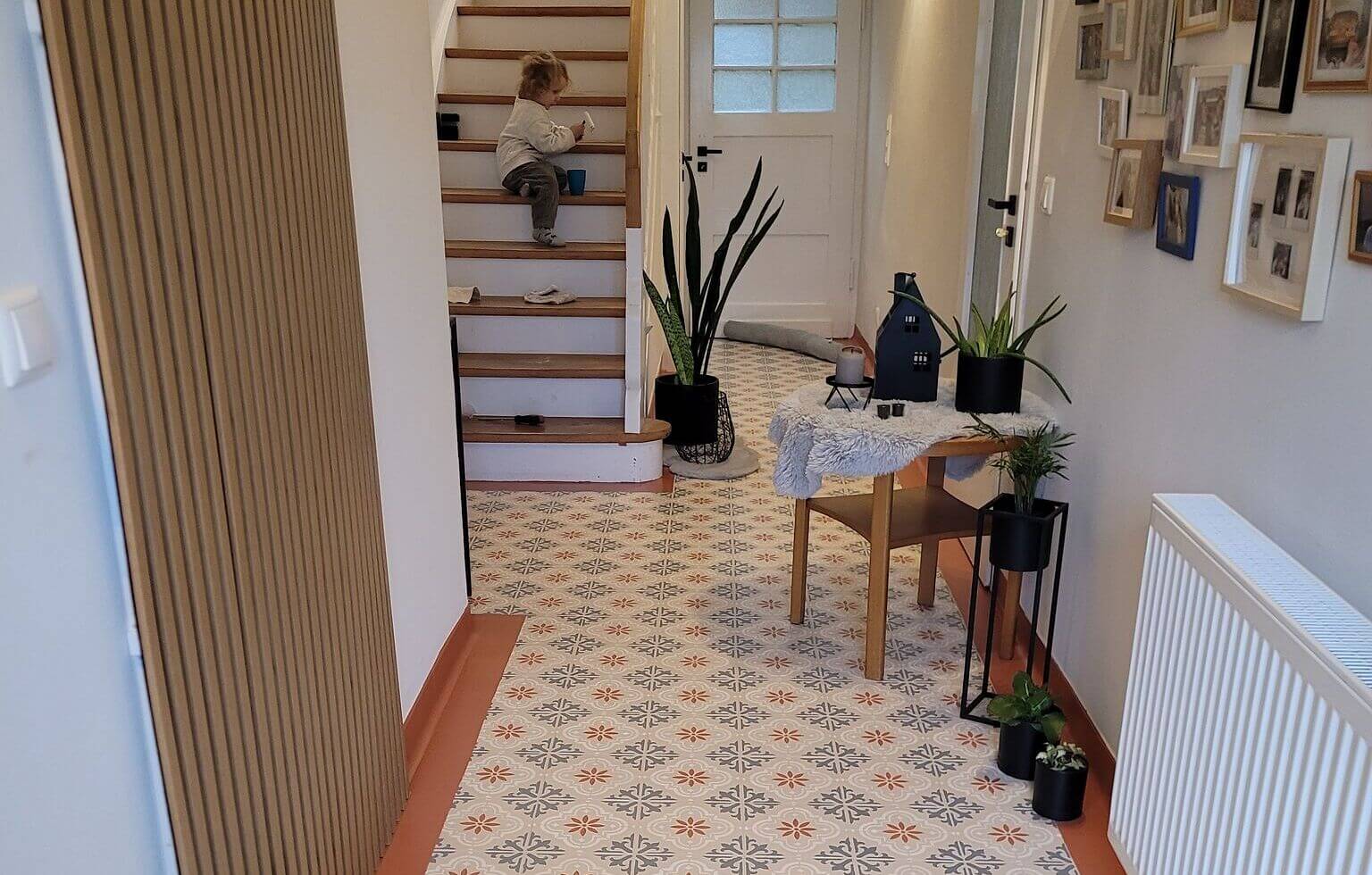
Fancy new floor tiles but not in the mood for a major renovation? Painting floor tiles is the solution! We've put together all the basic information for you here.
If you're interested in painting wall tiles, you can find the right blog here.
Why paint floor tiles?
There are some pretty hideous floor tiles out there with designs from past decades that simply no longer suit today's tastes. You often find them in the entrance, hallway, bathroom, or kitchen. However, tiles are a durable and low-maintenance flooring option, which is why we're often reluctant to part with them.
What's more, removing and laying floor tiles is a major renovation project. It usually requires professional help, creates a lot of mess, and can be very expensive.
But there is a fantastic solution: it's not just wall tiles that can be transformed — floor tiles can be painted beautifully too. With relatively little effort, you can turn your old tiles into modern eye-catchers. The painted tiles are touch-dry after just a few hours and reach their full strength during a curing time of about 10–14 days — giving you a robust, hard-wearing surface that's perfect for everyday life. Painting tiles creates a completely new look and is sure to give you a brilliant result.
Even though we love to encourage you with your DIY projects, unfortunately, even our high-quality paints have their limits. We advise against painting floor tiles where water tends to pool. This includes shower floors, ledges in the shower or bath, and any entrance areas where a wet doormat might sit.
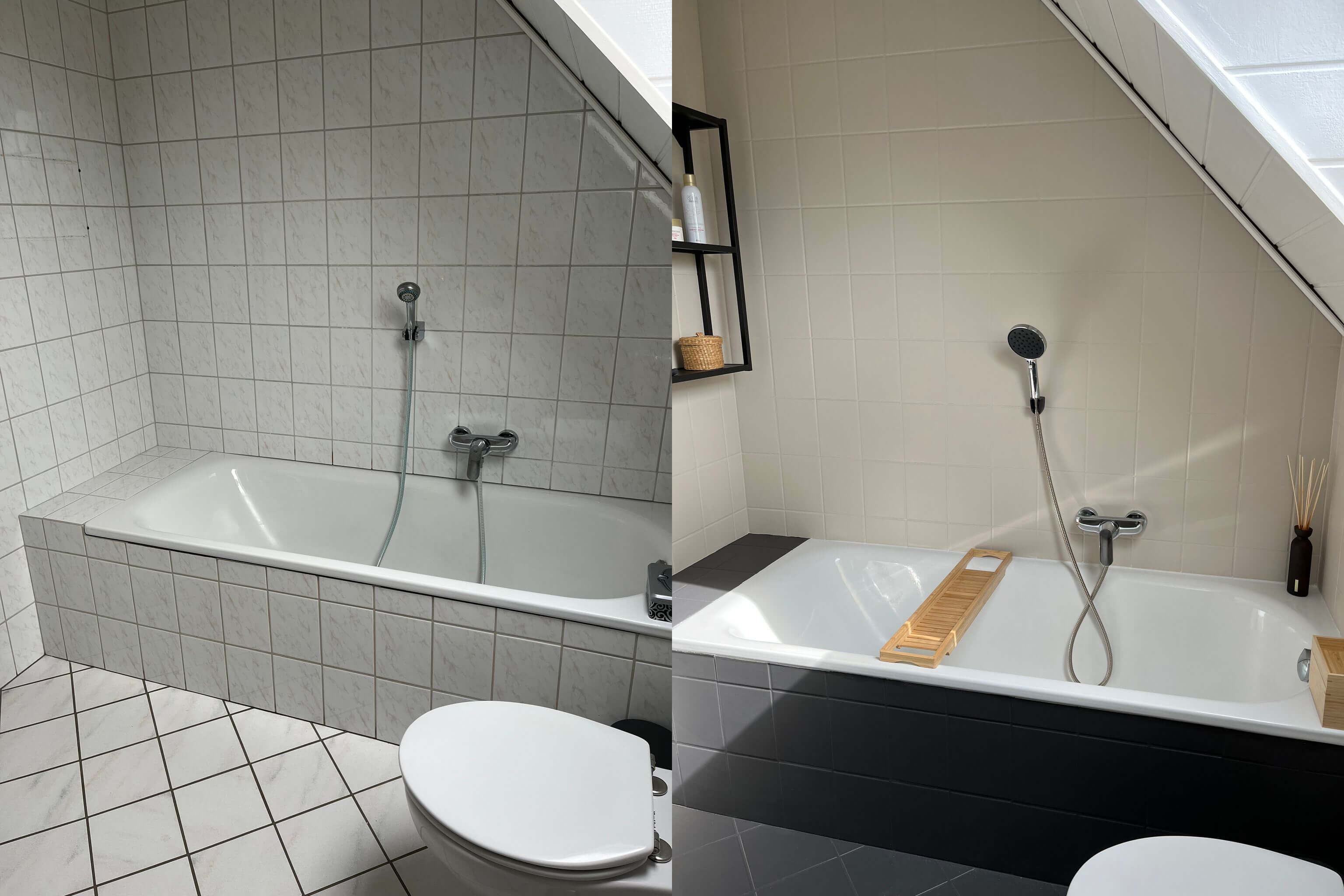
Before and After pictures from our Painting community
Take a look at how our hard-working and creative customers have transformed their floor tiles!
Painting floor tiles: step-by-step from selection to painting
Painting floor tiles doesn't require that much effort. Simply follow the step-by-step guide below. You can make a lasting change to the look of your tiled floors on a small budget
Step 1: Selecting the colour quality
First of all, you should choose the right paint quality for painting the floor. This is because a floor is exposed to much more mechanical stress than a wall. A floor also needs to be cleaned often, so in addition to the mechanical stress, there is also the chemical challenge of various cleaning agents
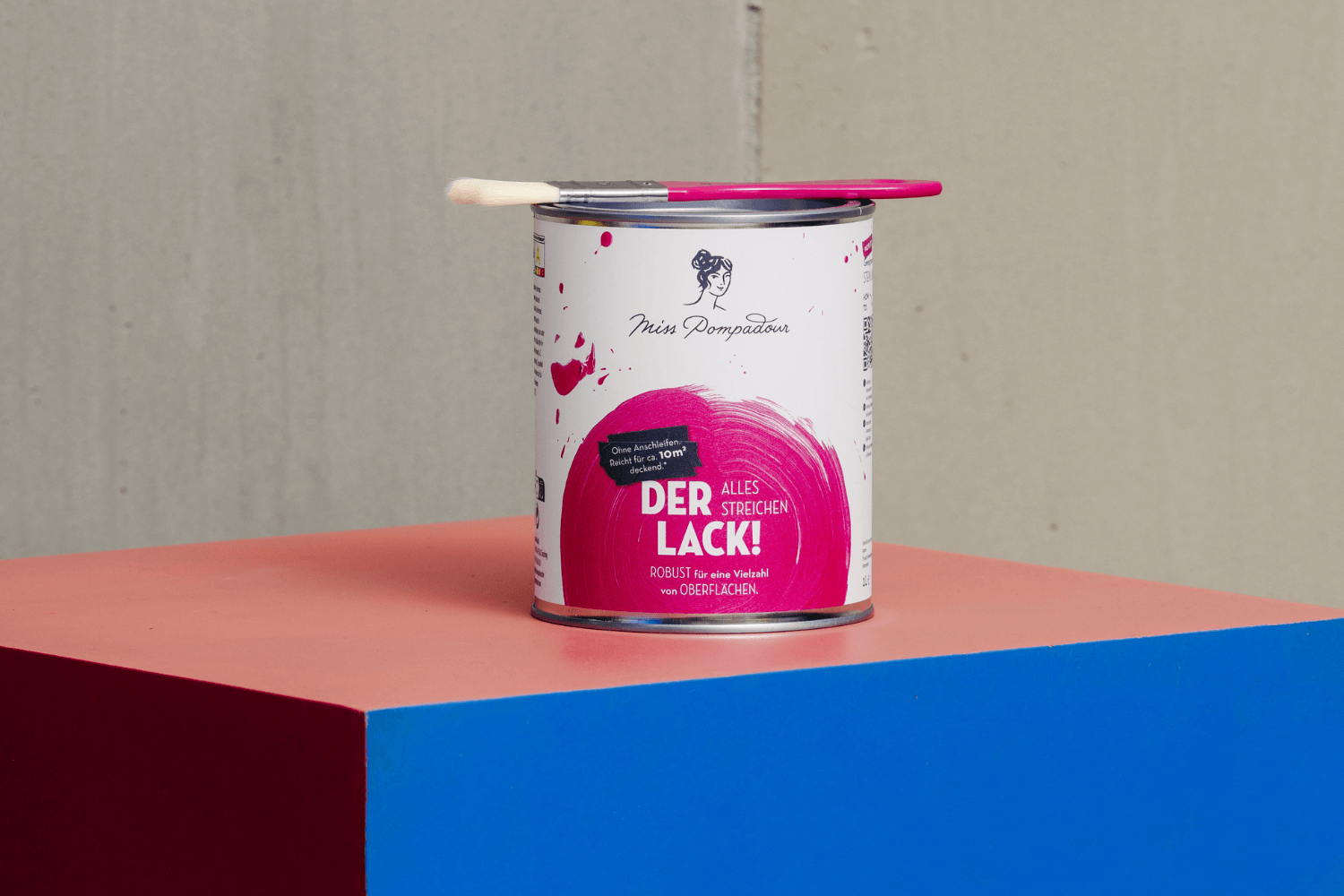
At MissPompadour, you'll find the perfect paint for your purposes: it's Easy Eggshell! This extremely hard-wearing varnish is easy to apply and lasts a long time
Step 2: Choose a colour shade
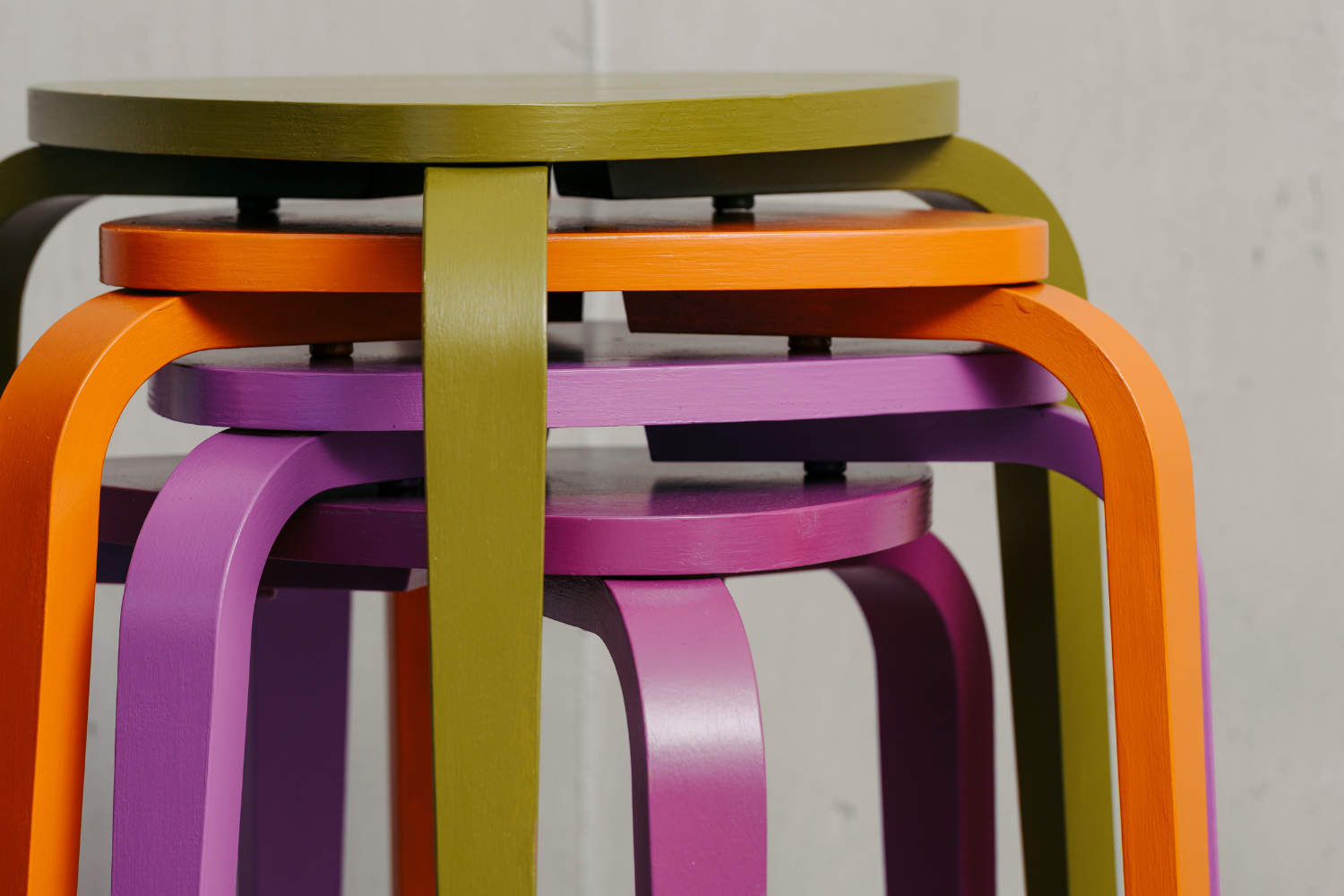
MissPompadour offers the Easy Eggshell! in over 100 different colour shades, so you can find your own individual colour in every case. Choose a colour shade that goes well with many other tones, as you may want to change the walls, furniture or accessories more often than the floor. Of course, you can also do it the other way round and use an accent colour on the floor if your room is otherwise neutral. To do this, order the colour cards from the Just paint Collection. The postcard-sized colour cards faithfully reproduce the colour shades. This allows you to see the colour shades directly in your room on the tiles you want to paint and find the right colour shade in no time at all.

Step 3: Order The Right Tools
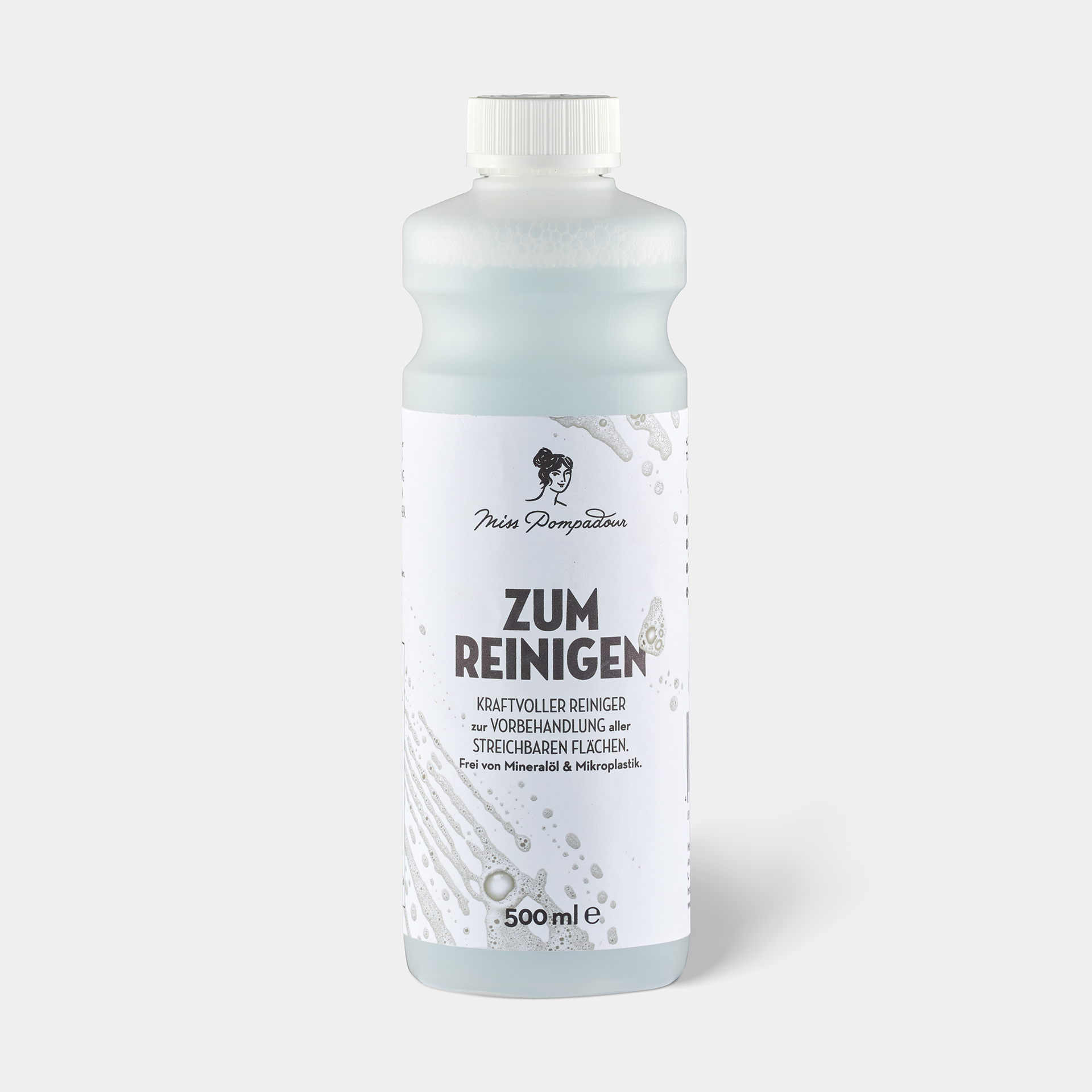
You’ll need a mild yet highly effective cleaner to thoroughly remove dust, dirt, and grease from tiles and grout. Do not use strongly alkaline or chlorine-based cleaners. Grease residues are often found in the grout, particularly in the kitchen. MissPompadour To Clean offers the ideal solution for this. Make sure there are no residues of floor polish or floor cleaning products on your floor tiles. These often contain waxes or silicone oils and can affect the adhesion and durability of the paint on the floor. These specialised care products can be removed using deep-cleaning products available from specialist retailers. And remember to remove any cleaner residue with clean water afterwards.
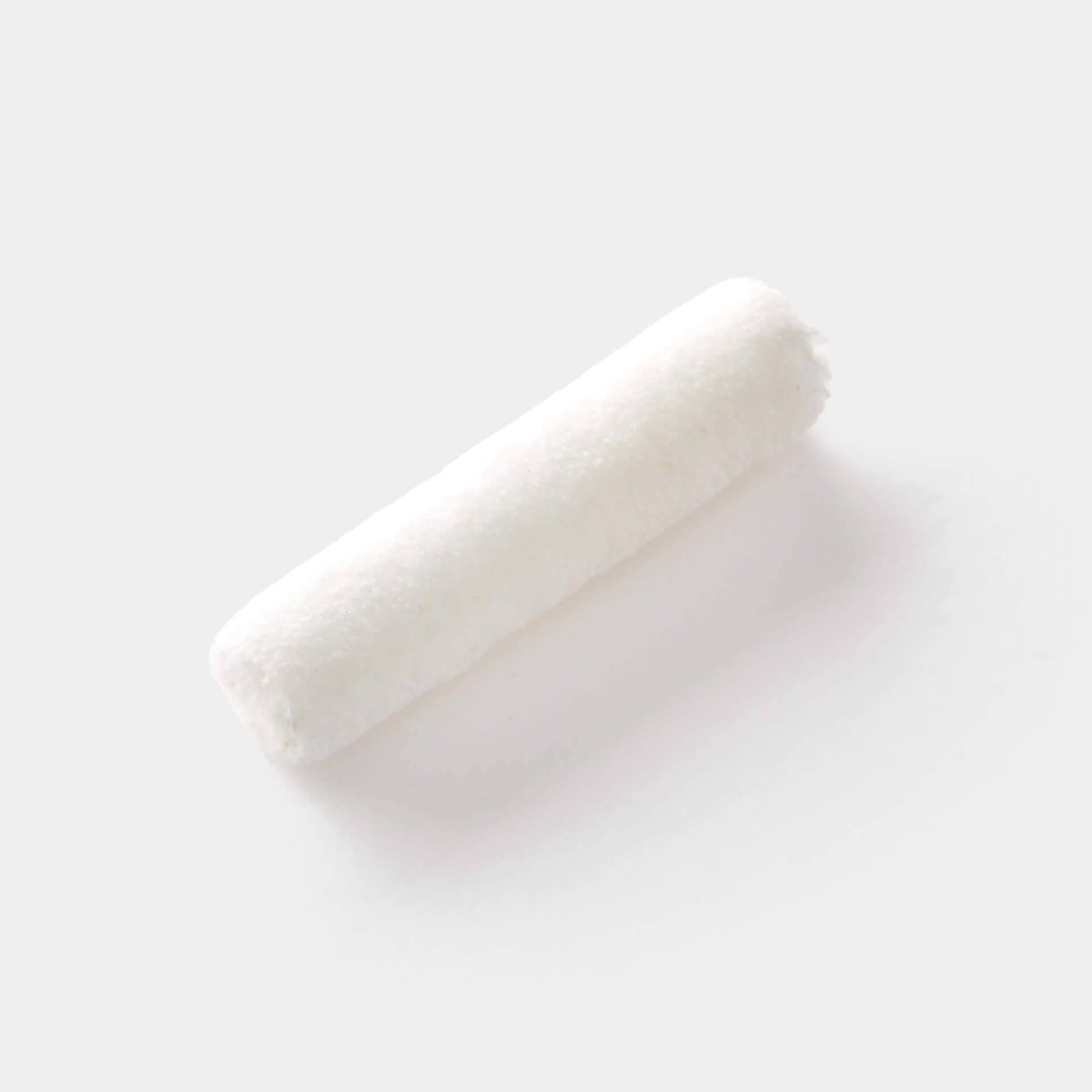
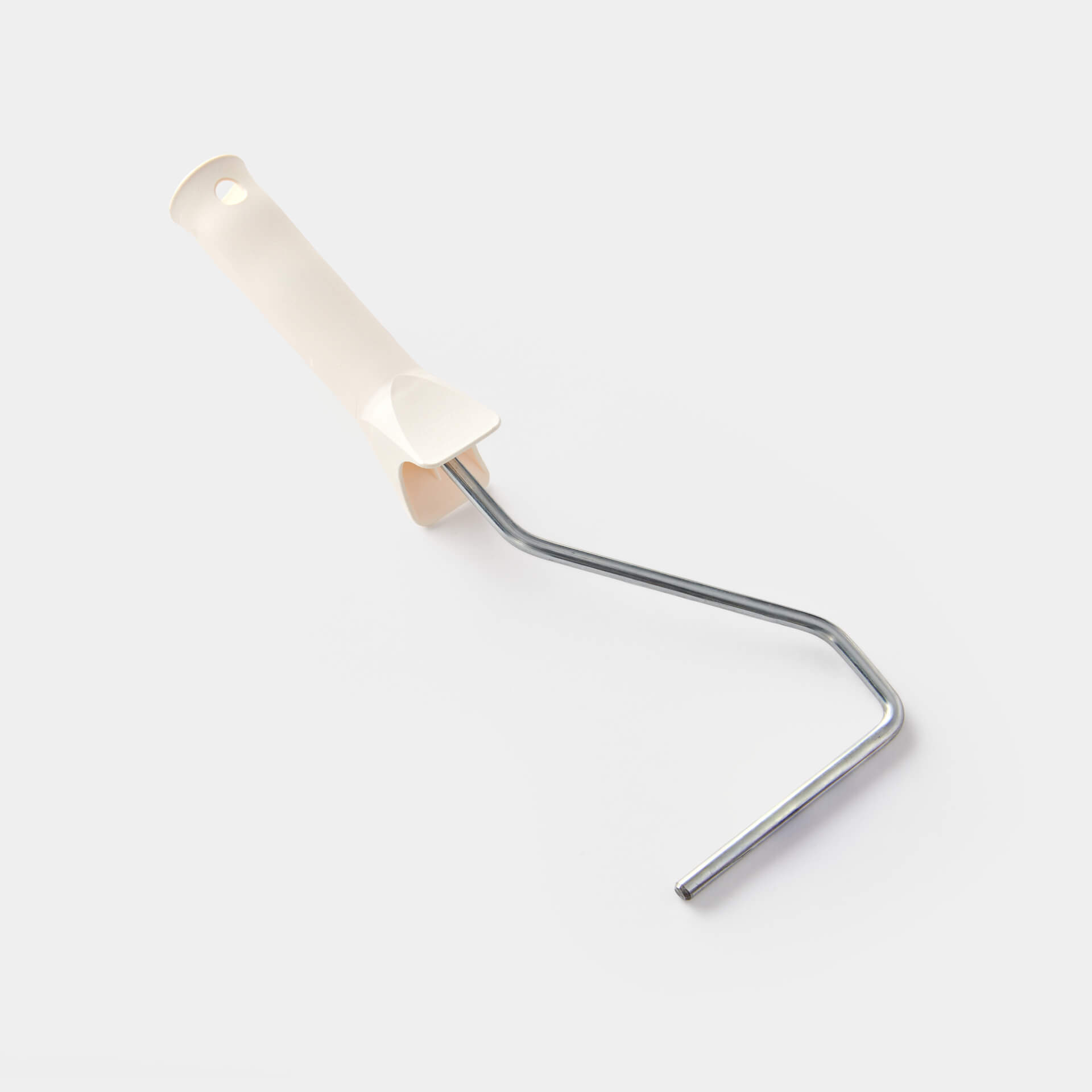
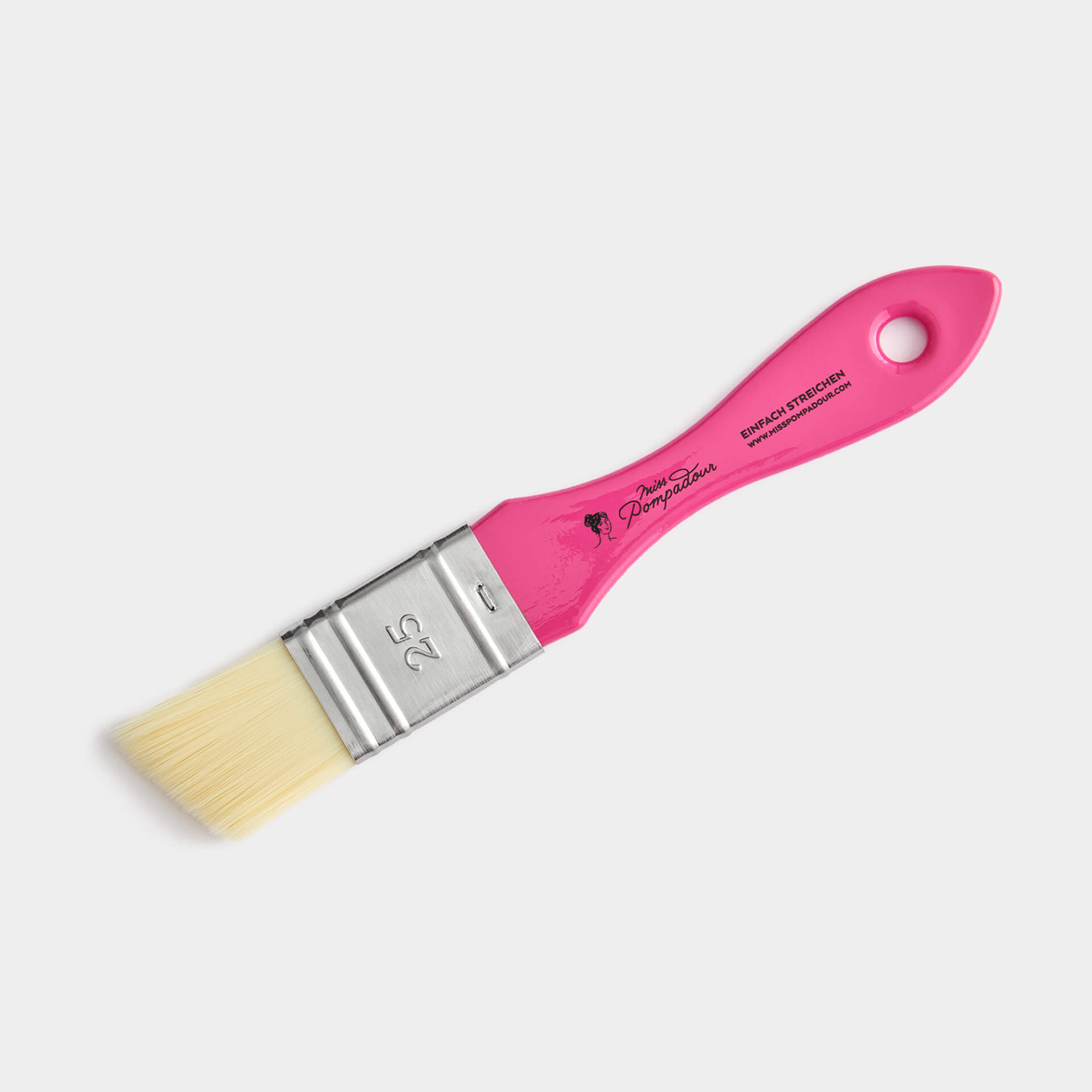
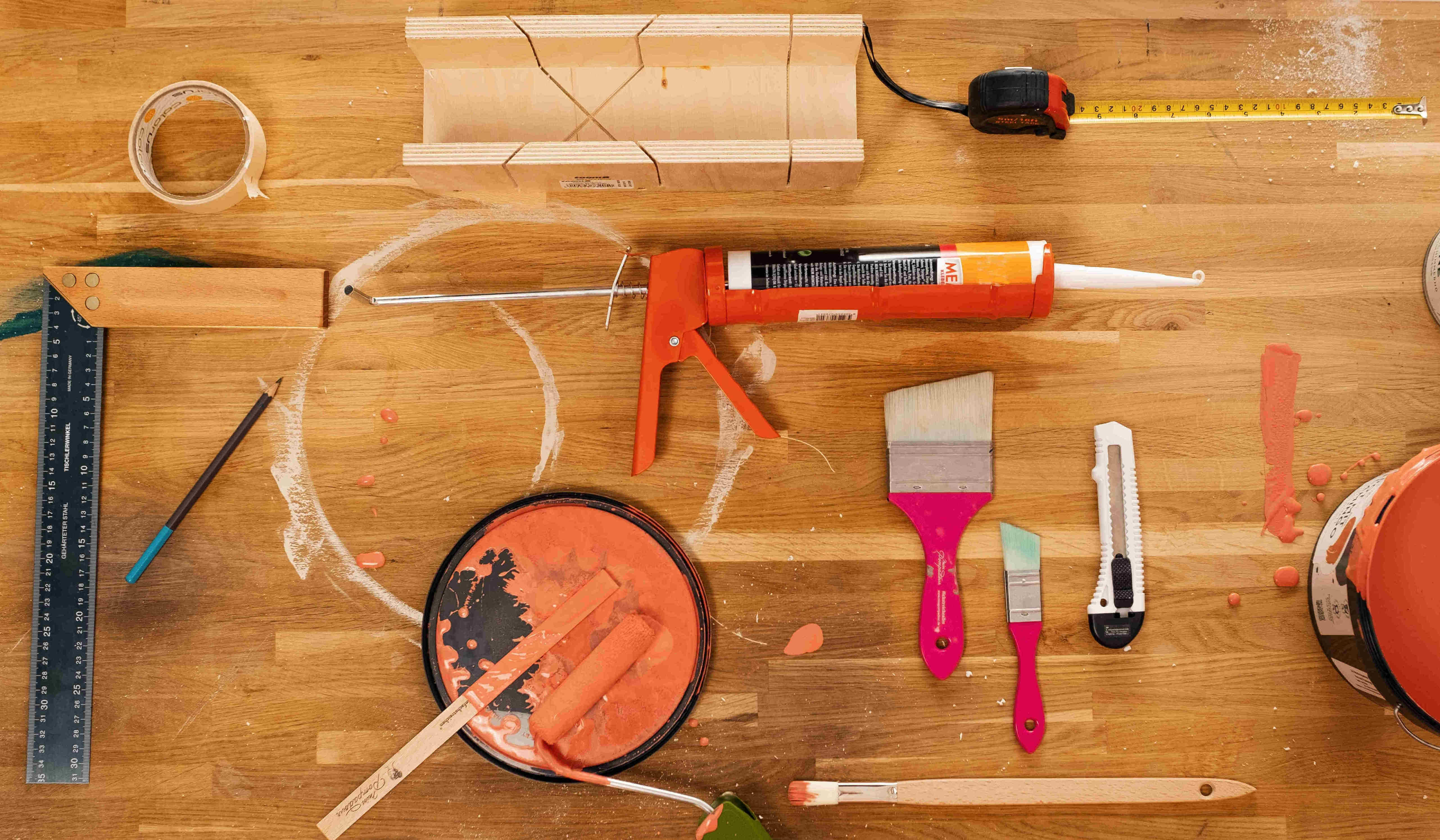
You’ll also need a medium-sized paint roller and a brush for working on the grout lines. For larger areas, a telescopic pole can be helpful – it’s easier on your back.
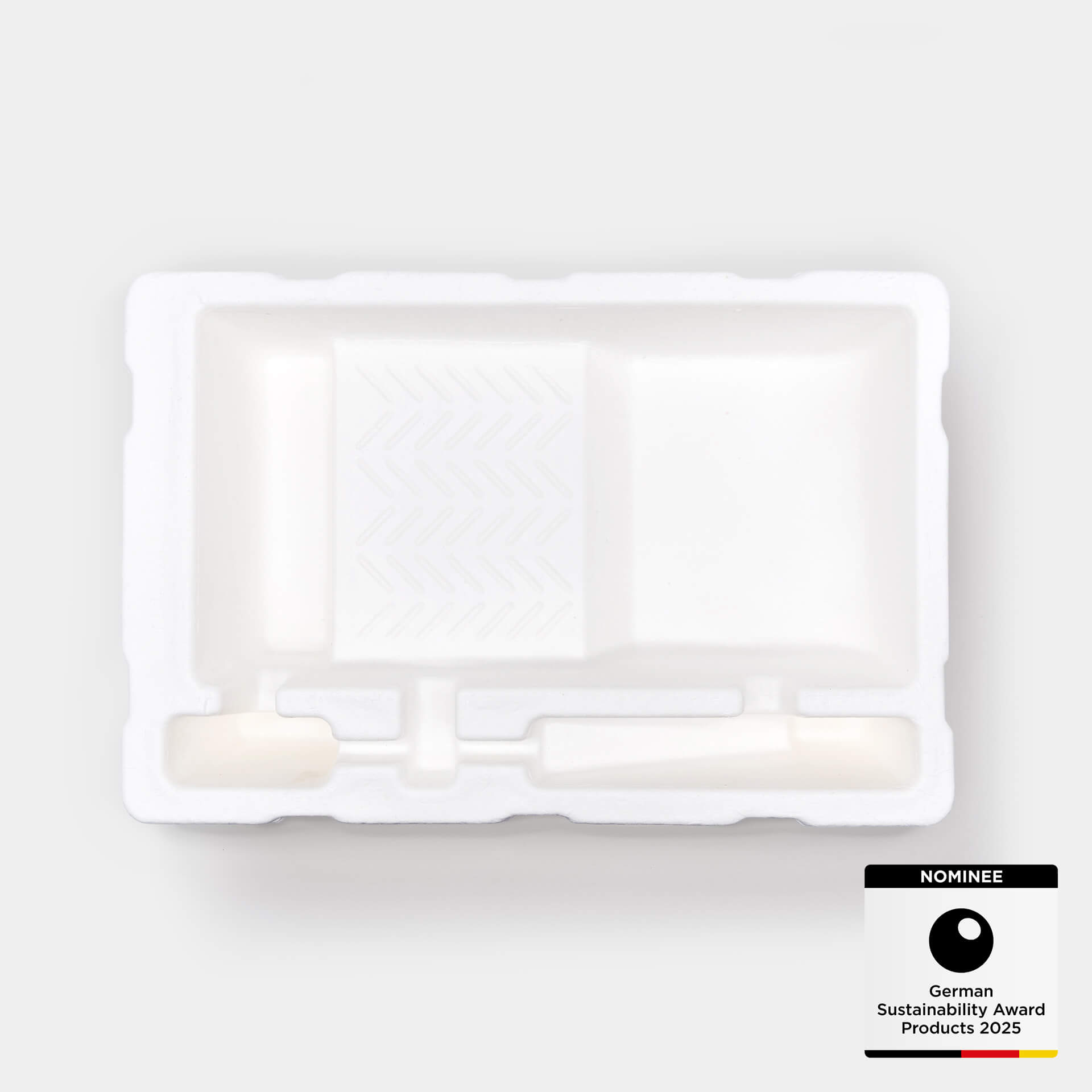
It’s best to order the brilliant, reusable ‘The paint tray!’ from MissPompadour as well. Not only does it hold the paint, but it also has various compartments where you can store your brushes and roller.
Need to mask?
Now’s the time to mask off any areas you don’t want to paint – for example, edges, neighbouring surfaces or fittings.
Pro tip #1: Always remove the masking tape immediately after painting, while the paint is still wet. This prevents you from peeling off the new paint when you remove the tape. Then re-tape for the next coat of paint.
Pro tip #2: If you want to mask off on surfaces that have already been painted (e.g., for two-tone designs), the paint must be fully cured. Allow at least 14 days for this, depending on humidity and temperature. In some cases, it may take longer. It’s best to test the paint in an inconspicuous area.
Step 4: primer
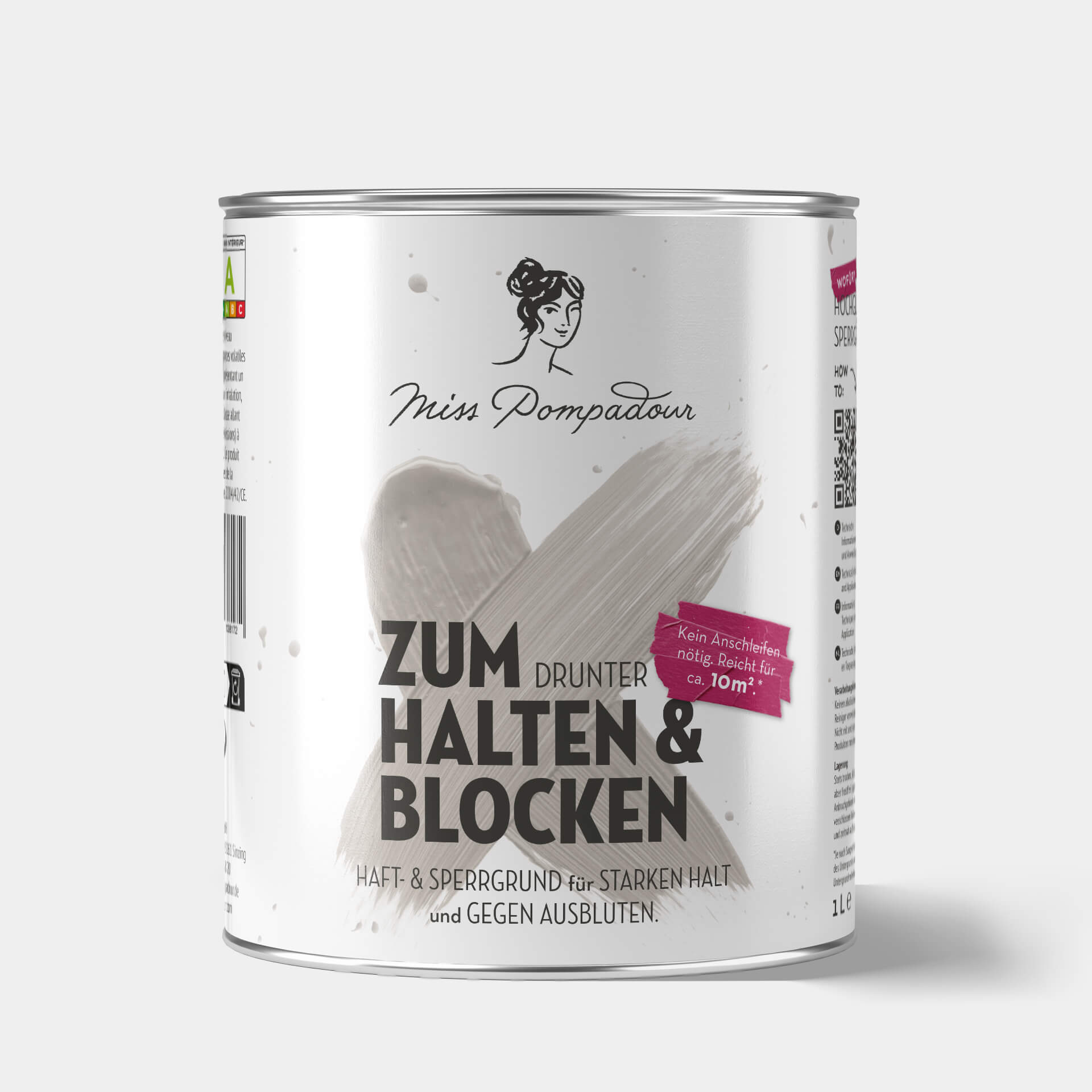
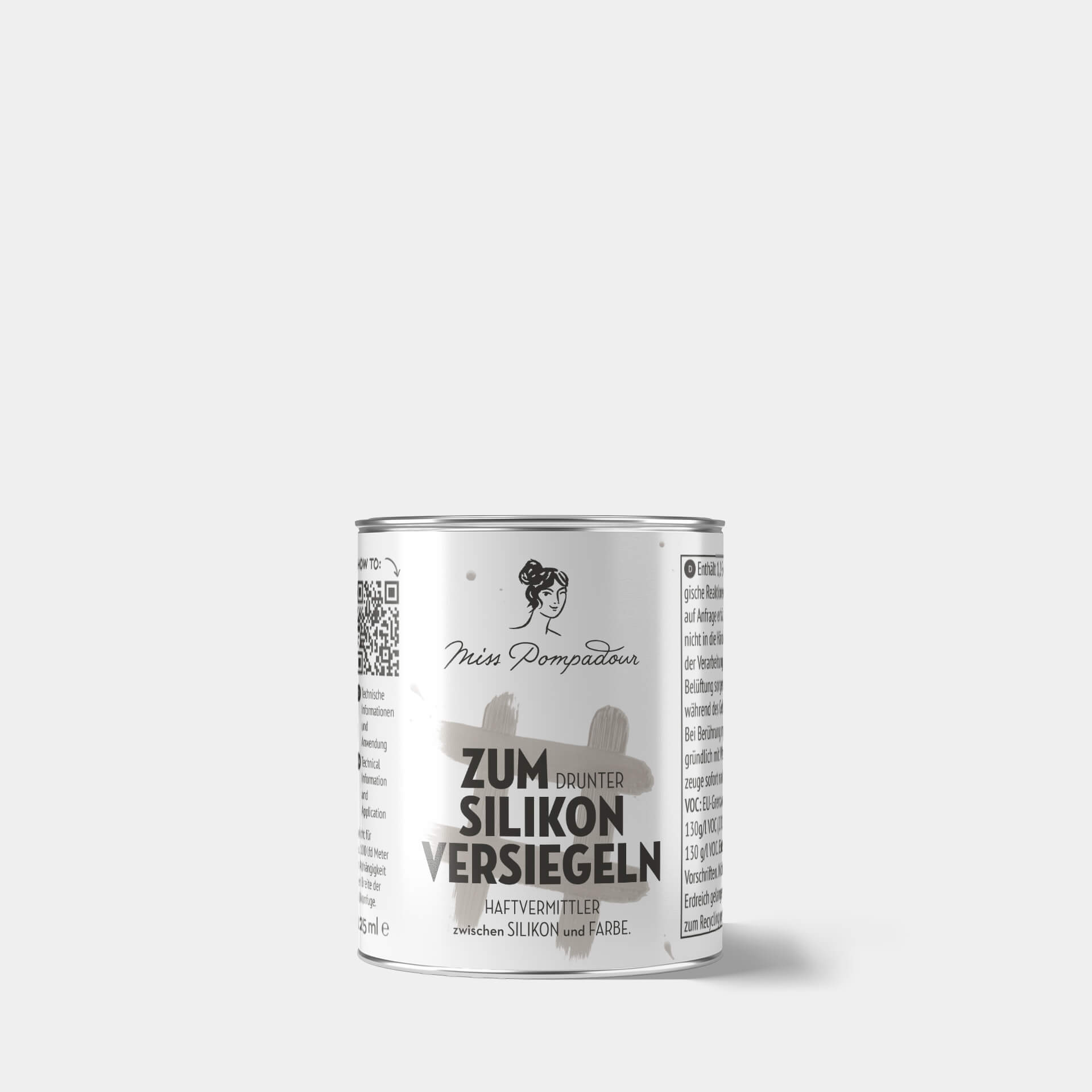
We definitely recommend applying a primer to floor tiles. Apply a coat of MissPompadour To Bond & Block to ensure the paint adheres securely.
Step 5: To Paint
Clean the floor thoroughly, rinse with water and allow everything to dry well. Then apply a well-covering coat of To Bond & Block. After approx. 3 hours, the primer can be painted over with varnish. Ideally, wait no longer than 1-2 days before applying the colour. This allows the primer and varnish to bond best. Allow the first coat to dry for at least 6 hours before painting the floor tiles for the second time.
After waiting 24 hours, apply a thin layer of topcoat to the surface. Tip: If the floor tiles are subject to heavy wear, you can also apply a second coat
If you want to work with stencils in several colours, make sure that each individual colour shade has enough time to dry. Finally, the coat is then finished with the pure topcoat. To Stencil instructions can be found in our blog on the subject
Step 6: Topcoat
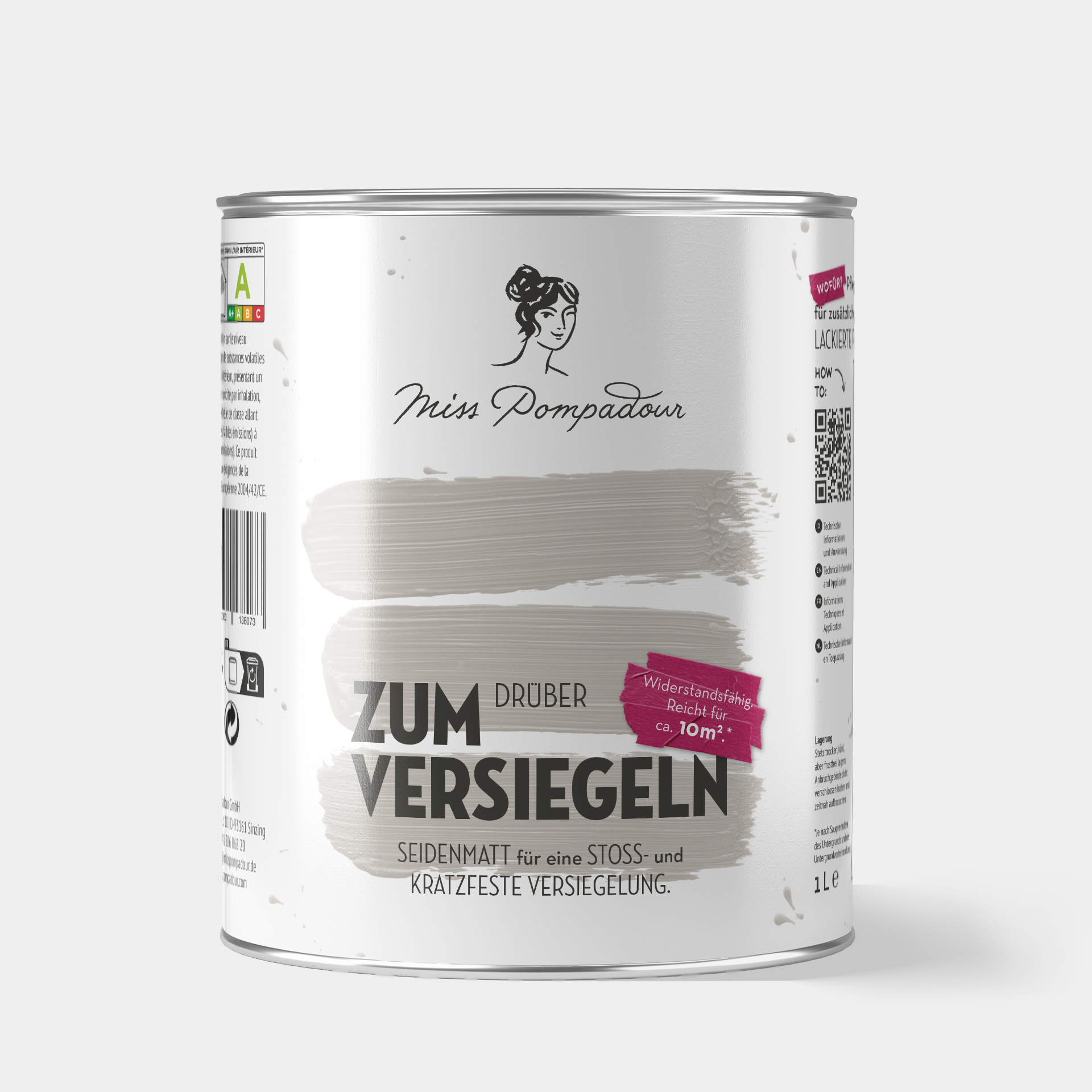
On floors, tile paint must always be sealed . The topcoat prevents scratches and pressure marks, and protects the paint against cleaning products and the like. It won't alter the shade, nor will it yellow over time. MissPompadour To Seal is the perfect product for this. Apply a generous layer of topcoat 24 hours after the final coat of paint, stirring the topcoat occasionally while you work.
Want to play it safe and prefer to apply a double topcoat? That's also possible. In this case, you should apply two thin coats. Wait 2-4 hours after the first coat of topcoat, then apply the second thin coat.
With fresh paint under the topcoat, the curing time is 14 days.
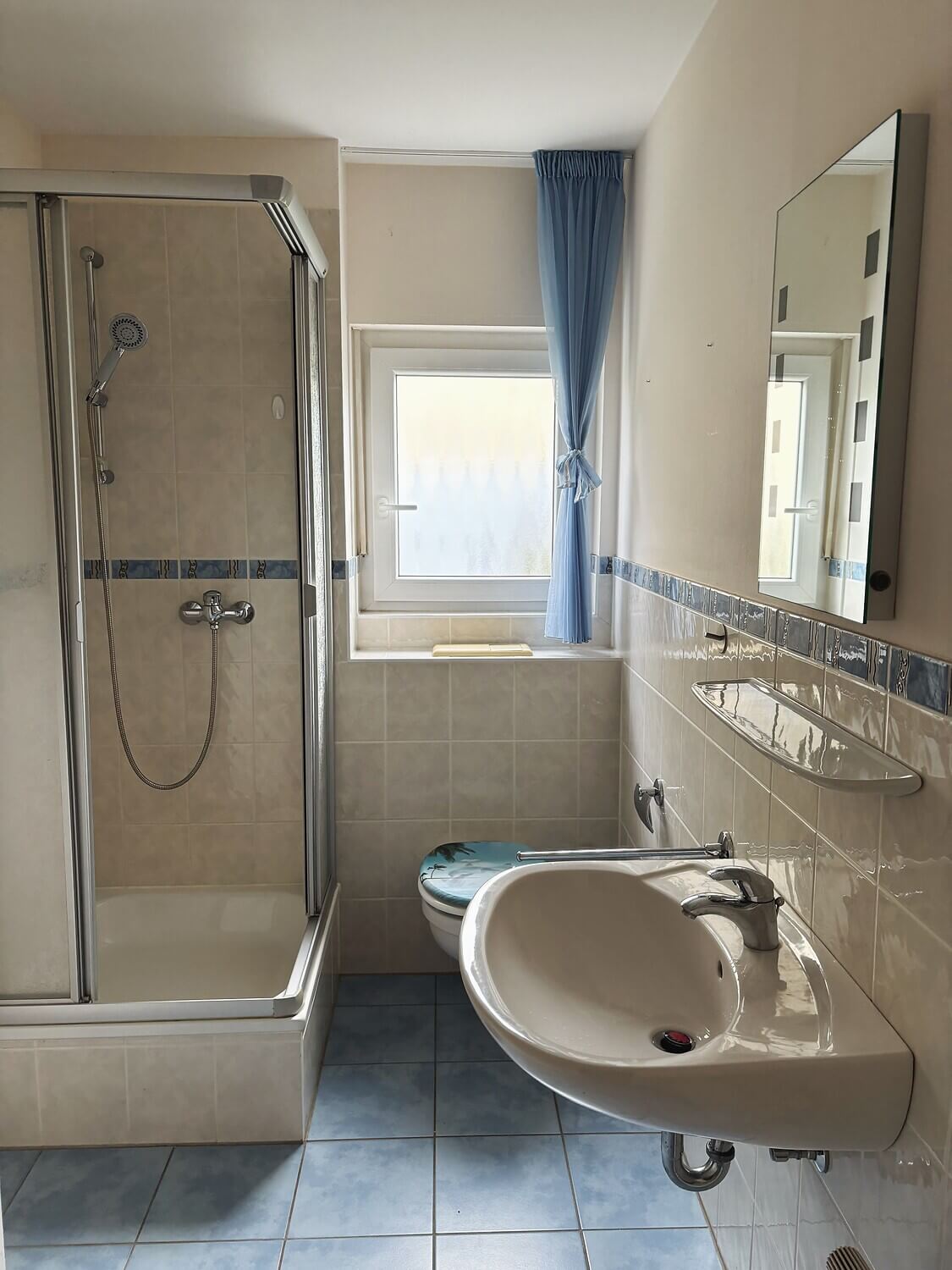
Facelift
This bathroom was old but of high quality.
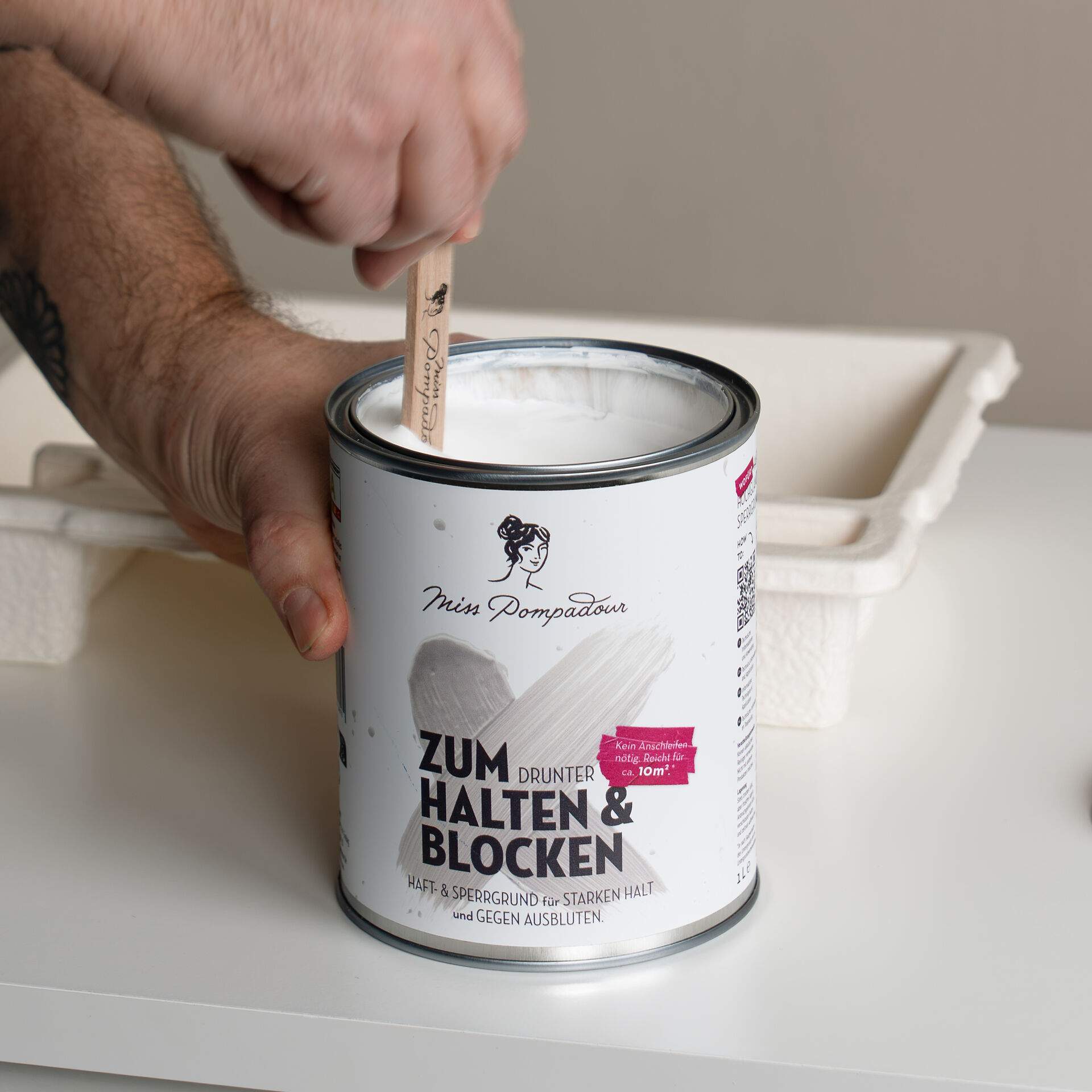
To Bond & Block
Prime first so that the varnish holds well.
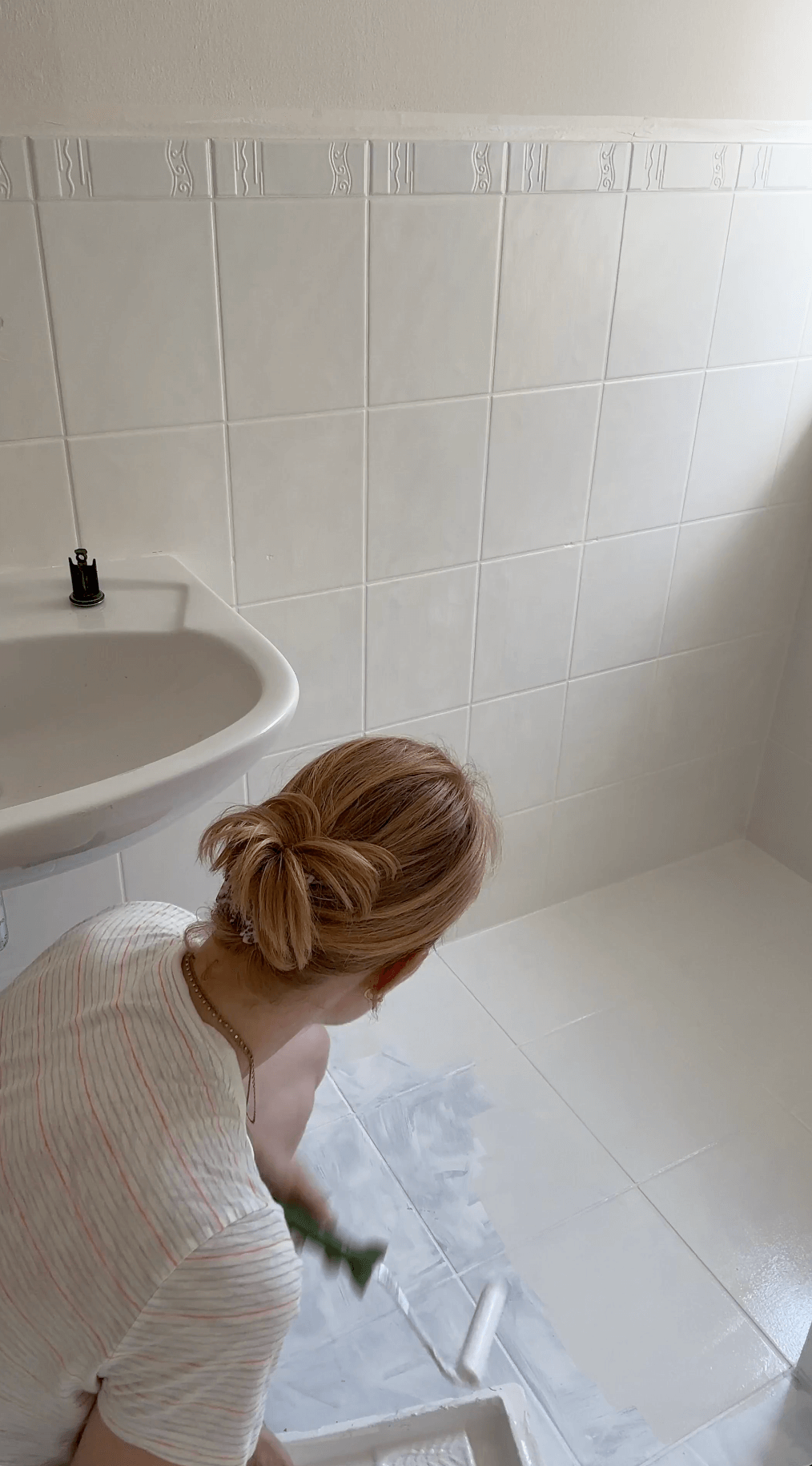
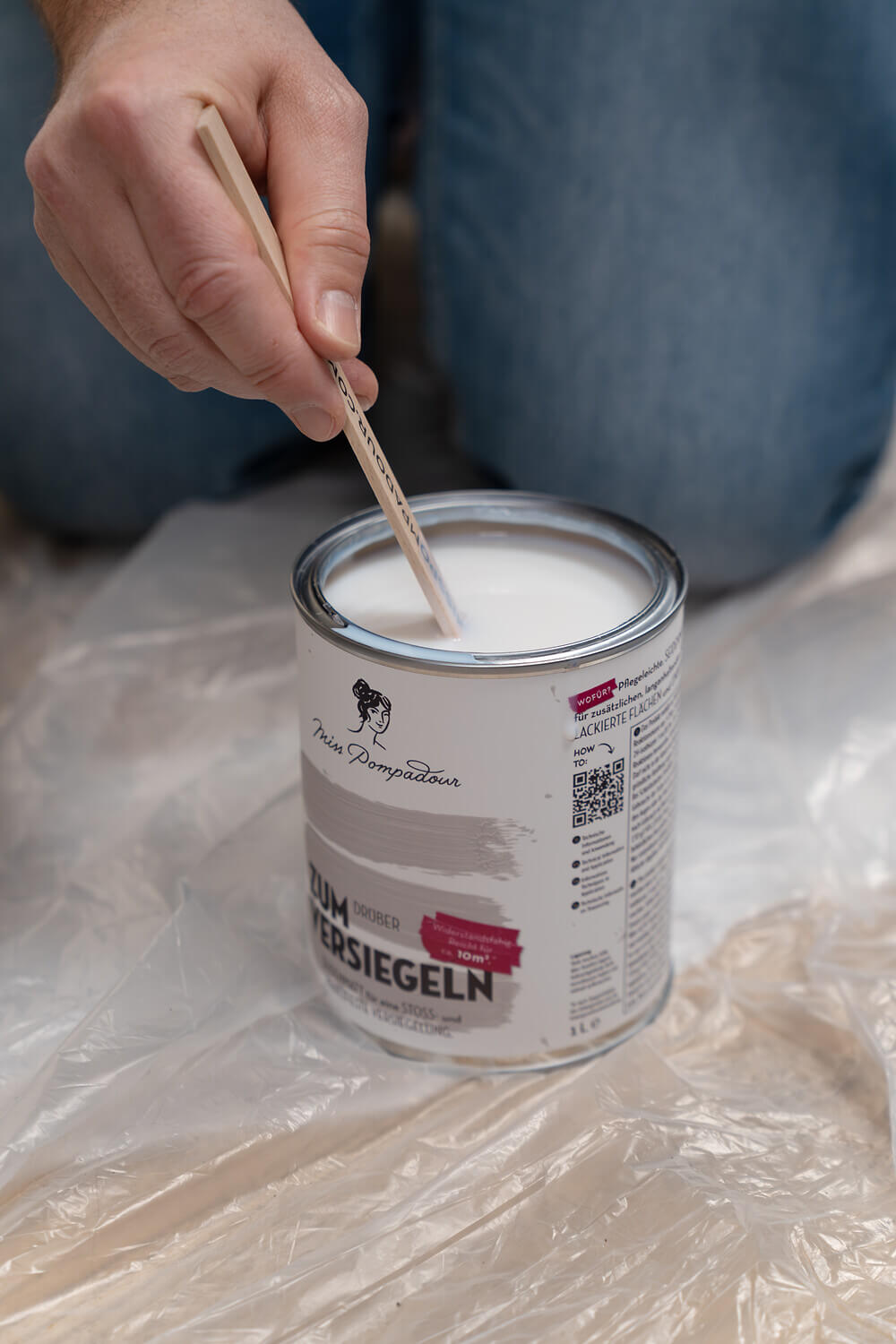
To Seal
To seal at the end.
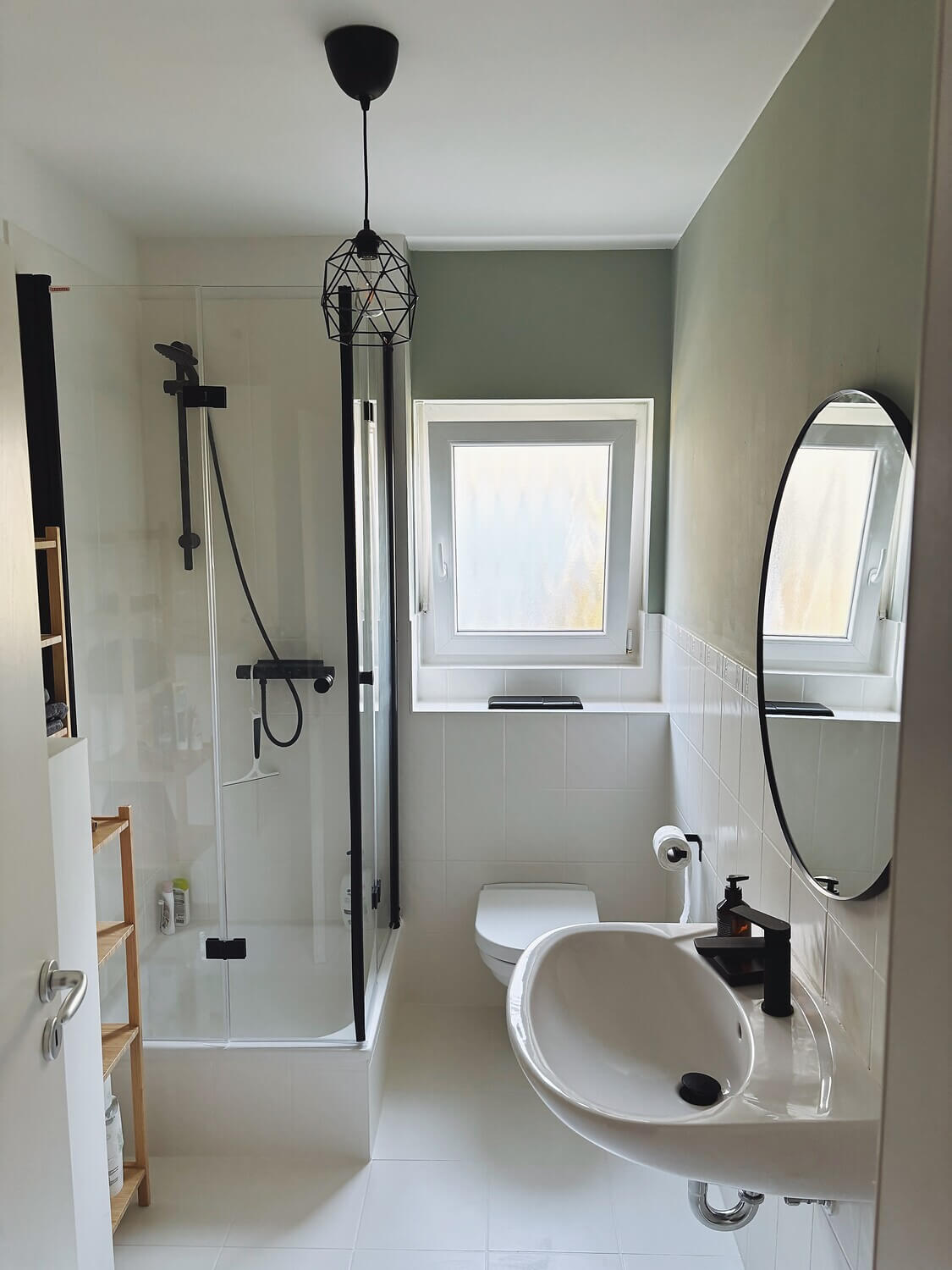
Wow
What a transformation!
When can the surface be walked on?
After a drying time of approx. 24 hours after the last application, the floor can be carefully walked on again. Initially not with shoes, but only with socks. It is advisable to place a sheet or similar on the floor for protection. Please remove this at night so that the colour can dry properly
Remember that our paints dry from the outside in. This means that when your paint feels dry, the inside may still be slightly damp. The paint on floor tiles is completely dry approx. 14 days after the last coat has been applied (depending on the thickness of the coat and the climatic conditions). However, it will continue to harden over the next few weeks
Frequently asked questions about painting floor tiles
Is floor tile lacquer scratch-resistant?
When the varnish and topcoat are completely dry after about 2 weeks, it is scratch-resistant. However, small stones under street shoes can certainly lead to scratches. We also recommend sticking felt glides under pieces of furniture that are moved on tiled floors and being careful with the floor in general.
Can I paint over painted floor tiles?
Yes, painted tiles can be painted over, provided the old paint is intact. If it flakes off or is not stable, it must be sanded down
How long do painted floor tiles last?
This depends on the load. If they are protected in critical areas, e.g. with runners, this is of course an advantage. You can also simply touch up minor imperfections - this also increases durability. Painted surfaces are always subject to wear and tear
Do I have to switch off the underfloor heating during painting?
Yes, be sure to switch off the underfloor heating and wait until the floor is at room temperature, i.e. no longer warm, before you start painting. Also wait about 2 weeks after painting before switching it back on.
The reason for this is that the paint will otherwise dry too quickly. This makes the painting process difficult and can also cause problems afterwards: if the binder in the paint sets too quickly, it can lead to adhesion problems. Therefore, leave the underfloor heating switched off until everything is thoroughly dry.
Can I paint all the floor tiles?
Even though we are always happy to encourage you with your projects, unfortunately even our high-quality varnishes have their limits. We cannot recommend painting floor tiles on which water remains. This includes shower floors, shelves in the shower and bath, as well as an entrance area on which a damp doormat remains. Standing water loosens the varnish. Floors in shops or commercially used areas are usually too heavily used to be painted.
In addition, specially coated or impregnated tiles, highly profiled floor tiles, tiles with a lotus effect or terracotta cannot be painted, as the tile varnish will not adhere to their surface. If in doubt, create a test surface beforehand!
Do I need a primer for my floor tiles?
As a floor is always subject to heavy loads, it is necessary to prime the tiles with a primer such as MissPompadour To Bond & Block. This simply allows the colour to adhere better. One well-covering coat of primer is sufficient
Should I seal my lacquered floor tiles?
Yes, floor tiles should always be sealed. With MissPompadour To Seal, you can additionally protect your coating from mechanical and chemical stress. The topcoat can also be refreshed from time to time if it becomes worn
How long do I have to leave the varnish to dry after varnishing the floor tiles?
You should give your painted floor tiles 24 hours before carefully walking on them with socks. Your painted tiles will be fully cured after a drying time of approx. 14 days, and even after that the varnish will become more stable from day to day. If you have a lot of foot traffic, you can initially lay out a cotton cloth or rugs during the day. However, please remove these overnight so that the colour can cure properly
Do I need to take special care of a painted floor?
As a floor is subject to a lot of wear and tear, you should treat the floor tiles with a little care. Always stick felt glides under your furniture and place a runner, for example, on paths that are frequently walked on. In our experience, painting floors is perfectly suitable for everyday use if you take a little care
Can I paint my balcony and patio tiles?
In this area, we find it difficult to make predictions about durability. Because here too, if the areas are exposed to moisture or humidity, the varnish can soften. In addition, there is no suitable topcoat from our brands for these areas that could provide additional protection for the varnish. And the impact of shoes outdoors may be greater than indoors. You should therefore weigh up carefully whether to varnish your outdoor floor tiles.
You need these products to paint your floor tiles
Already finished reading?

Questions ?
We're here to help
We'll help you anytime, via Phone (Mo-Fr 09-18, Sa until 16 Uhr), via WhatsApp or directly via our Contact Form.